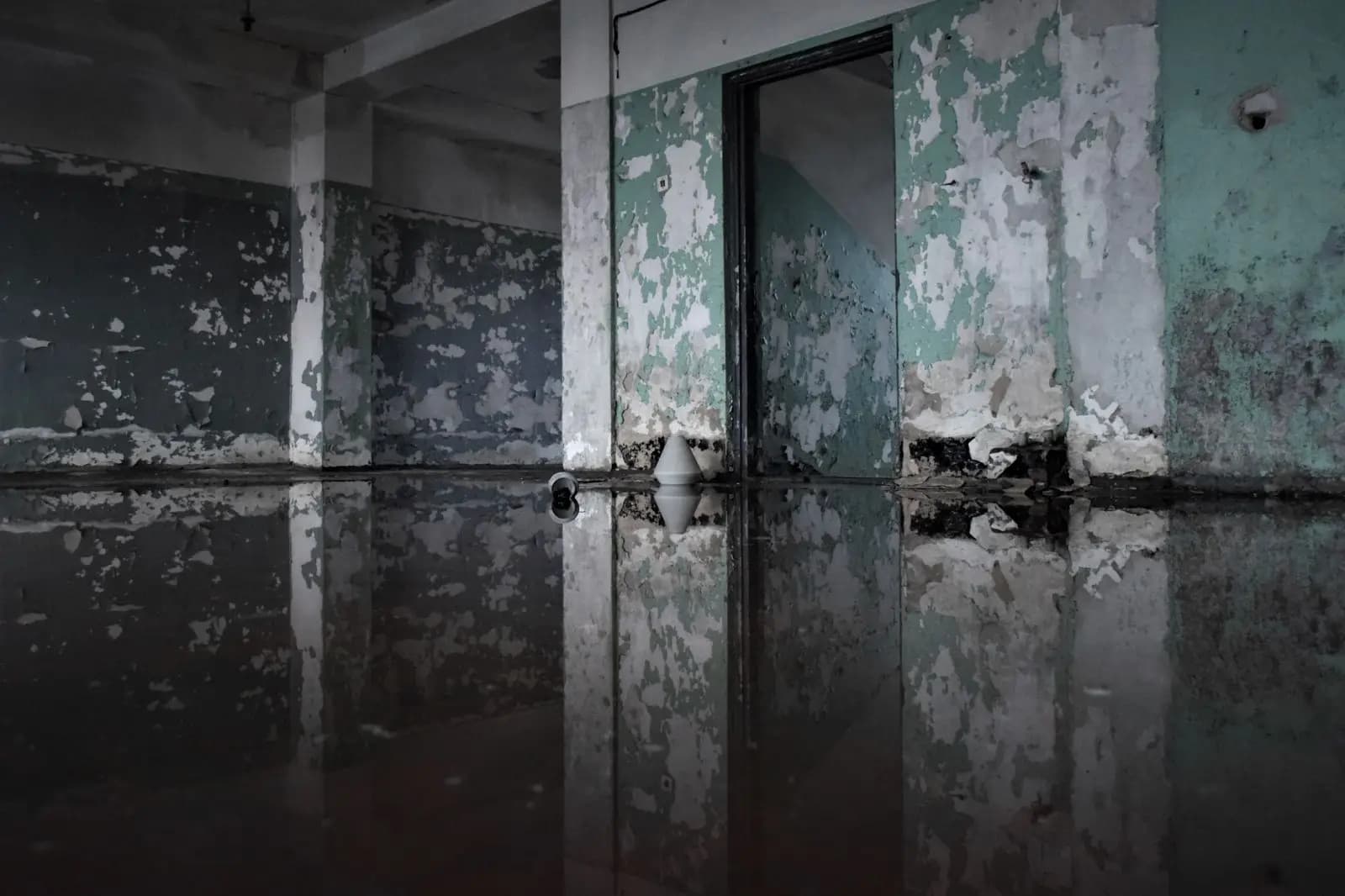
Heavy rain and groundwater
Northern New Jersey sees intense rainfall from thunderstorms, nor'easters and the remnants of tropical systems. When soil around a foundation becomes saturated, water pressure pushes it through cracks, joints between the wall and floor, and porous block. The remnants of Hurricane Ida in 2021 showed how quickly this can happen across many neighborhoods at once.
Sump pump problems
- Power outages during storms
- Stuck or failed float switches
- Pumps too small for the water volume
- Discharge lines that are frozen, clogged or too close to the house
Gutters, downspouts and grading
Clogged gutters overflow right along the foundation. Short downspouts dump roof water where it's most likely to enter the basement. Soil that slopes toward the house directs surface water inward.
Plumbing and appliances
Water heaters, washing machines, water softeners and supply lines are often located in basements. A tank failure or burst hose can put a lot of water on the floor quickly.
Sewer backups
Blockages in the house's sewer line — often from tree roots in older clay pipes — or overwhelmed municipal systems during storms can push sewage up through floor drains. This is a contaminated-water situation that requires professional cleanup.
Reducing the risk
- Add a battery-backup sump pump and test it seasonally
- Install water alarms near the sump, water heater and washer
- Clean gutters in late fall and spring
- Extend downspouts well away from the foundation
- Ask a plumber about a backwater valve if you've had sewer backups
This guide is general information for property owners. It isn't legal, insurance or engineering advice. For electrical, gas or structural hazards, contact your utility or a licensed professional.

